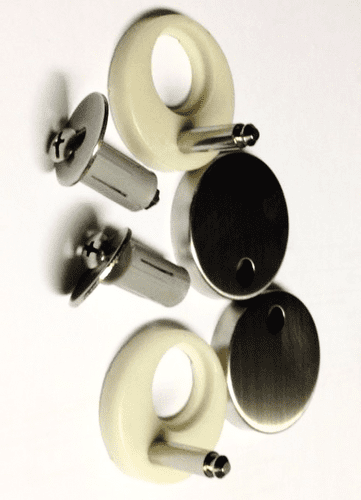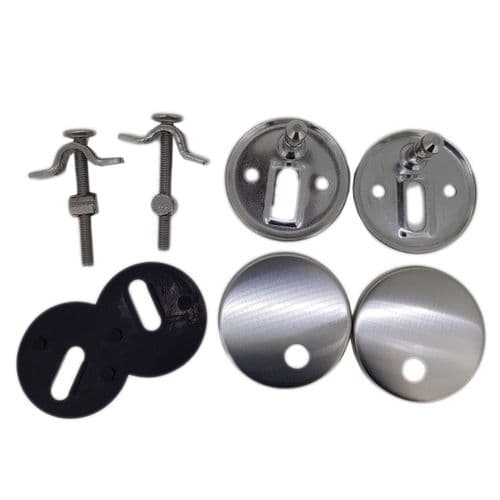
Toilet Seat Hinges & Fixings
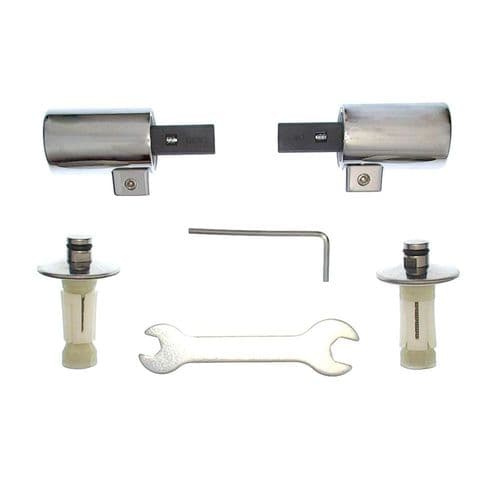
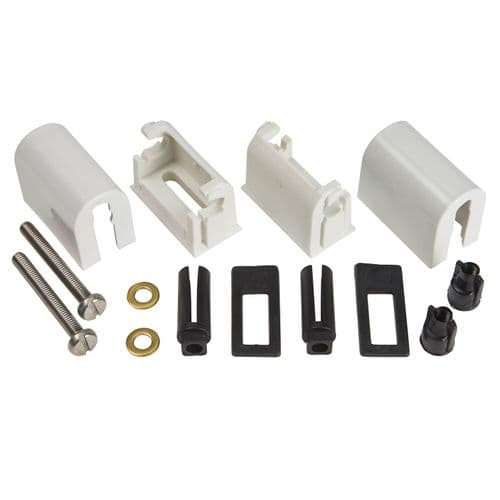
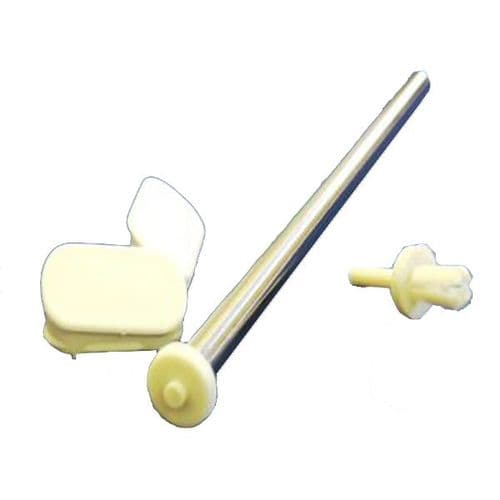
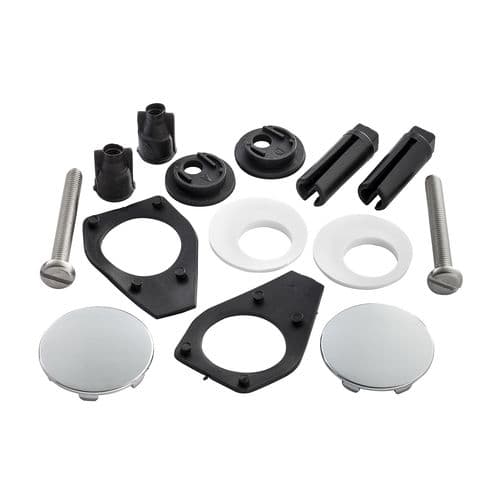
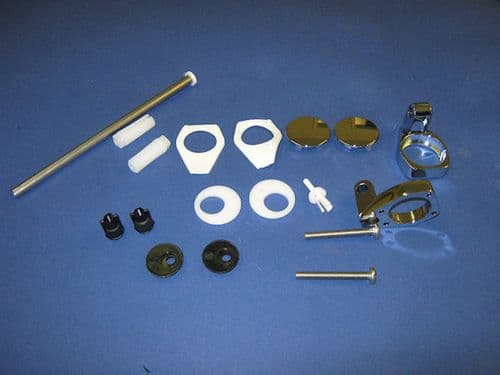
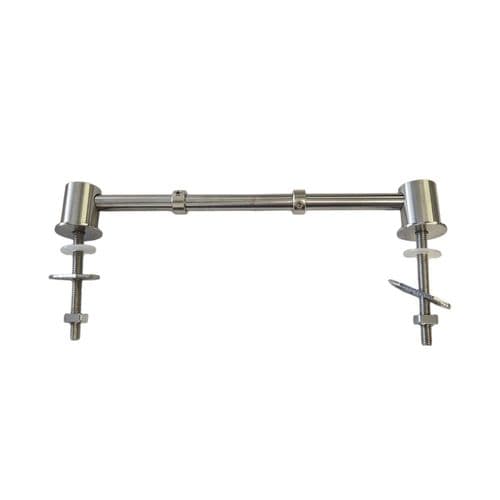
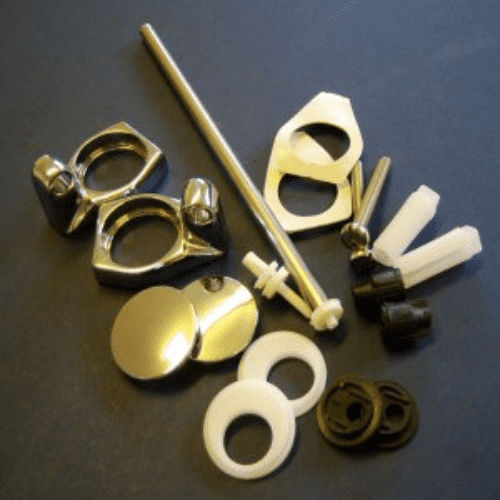
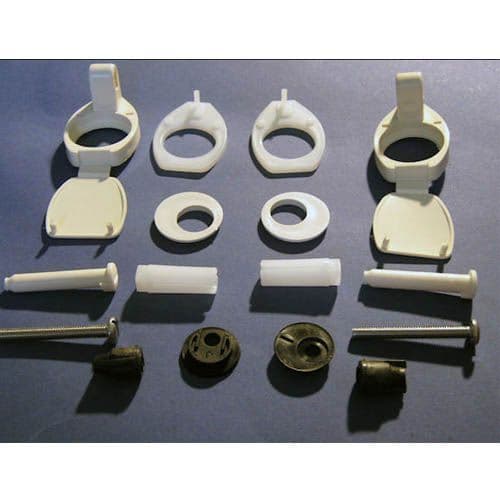
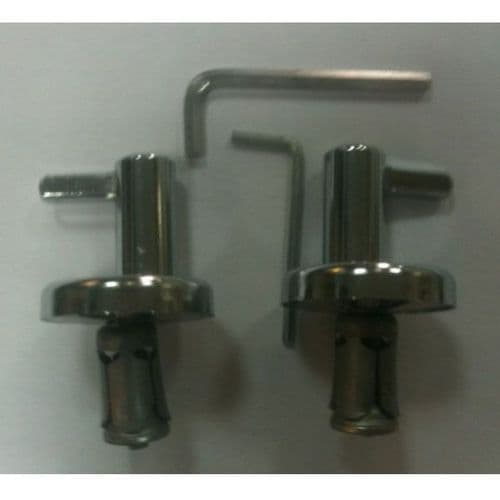
A wobbly toilet seat is almost always a toilet seat fittings issue, not a seat issue. The hinges, the bolts, the plugs and the small fixings under a toilet seat wear at different rates. Once one component goes, the seat moves under weight, the lid clatters, the soft-close stops closing properly. Most repairs come down to a single fitting kit rather than a new seat. Replacement parts cover top-fix and bottom-fix hinges, concealed fixings, soft-close hinge sets, universal fitting kits, plastic and metal plugs, and the small brackets that hold everything tight.
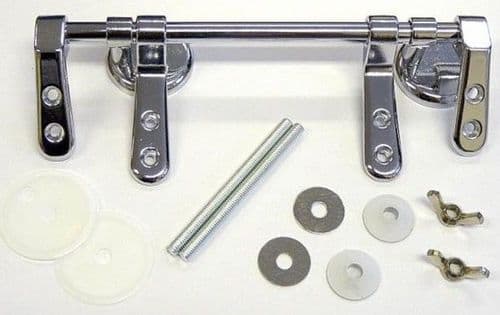
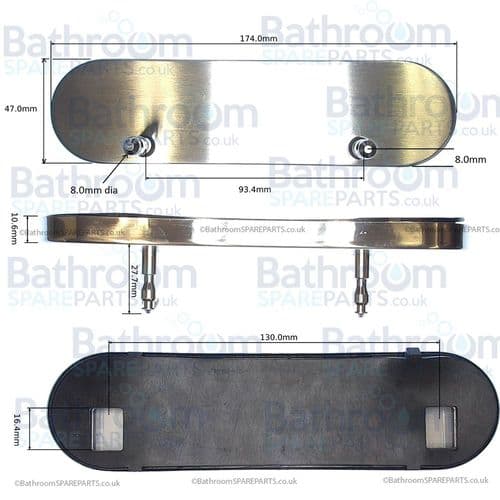
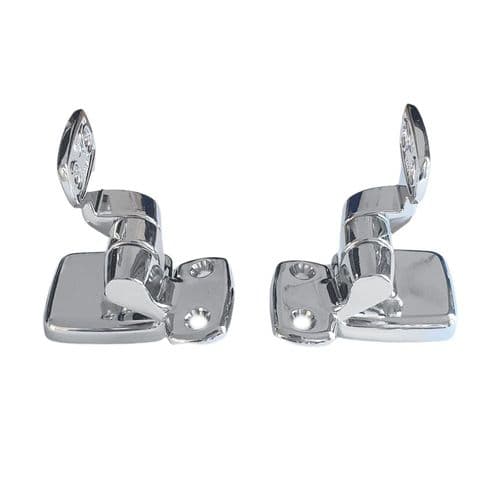
B.C Sanitan Replacement Bar Hinge Set Gold BC-HIN-G
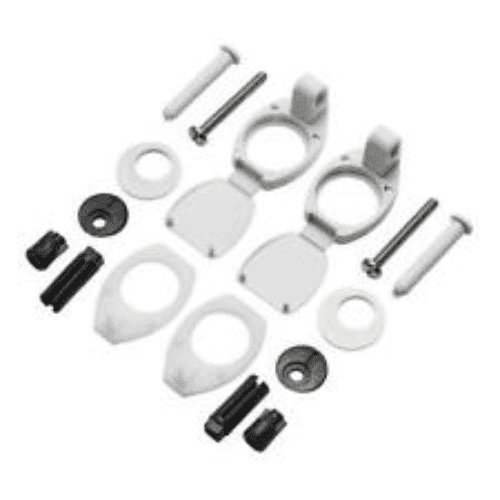
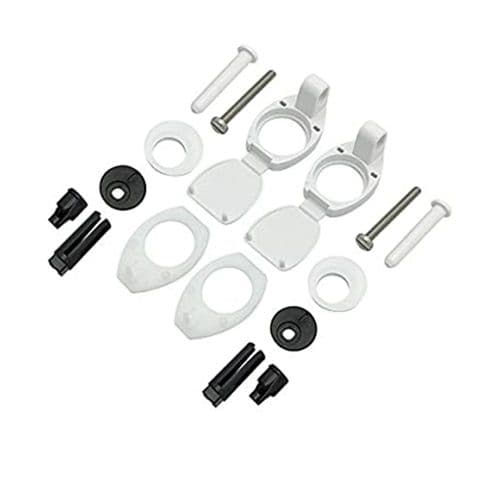
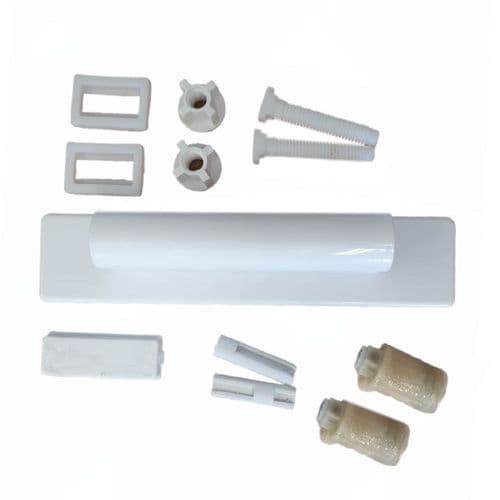
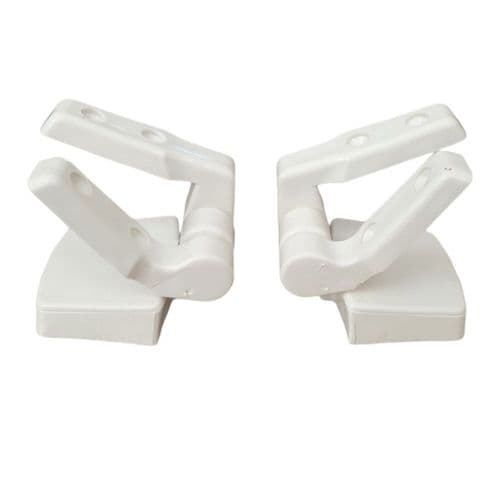
Bemis HG55 PL Replacement Toilet Seat Hinge Set - HG0055000 White
TOILET SEAT HINGES & FIXINGS | BUYING GUIDE
Why Toilet Seats Wobble: Top-Fix Versus Bottom-Fix Patterns
Toilet seats loosen progressively. The first sign is a small wobble under weight, then a click as the lid drops, then the seat sitting unevenly on the bowl, and eventually a visible shift when leaned against. Almost every case is wear of the small plastic and metal parts that hold the seat: the bolts, the wing-nuts, the plastic plugs at the rear of the hinge, and the brackets that clamp around the bowl rim.
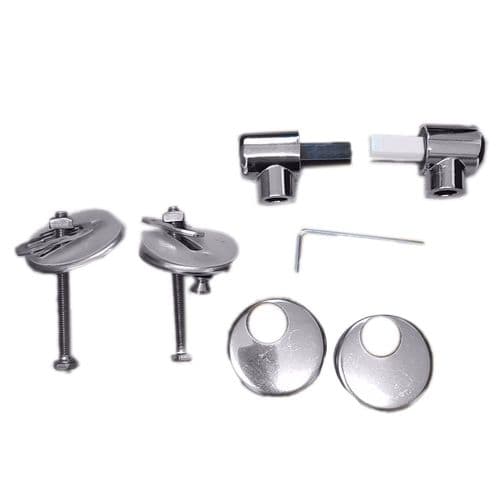
The fix depends on the fixing pattern. UK toilet seats use one of two hinge patterns. Top-fix means the bolt threads down from above through the seat hinge and into the porcelain, with the nut tightening from a recess on the underside. Bottom-fix is the opposite: the bolt accesses from below the bowl with a wing-nut or hand-tightenable knob. Wall-hung and back-to-wall WCs typically use top-fix because access from below is restricted; close-coupled domestic WCs are mostly bottom-fix.
Identify which pattern you have by looking under the bowl rim. A visible wing-nut, knob or threaded bolt means bottom-fix. Smooth porcelain with no fixing visible from below means top-fix. A plastic housing covering the joint means a concealed fixing, where the housing hides either method underneath. Replacement parts are not interchangeable between top-fix and bottom-fix; matching the existing pattern is the first decision before ordering.
Concealed, Soft-Close and Universal Fixings
Beyond the standard top-fix and bottom-fix hinge, several specialised fixing styles cover specific use cases.
-
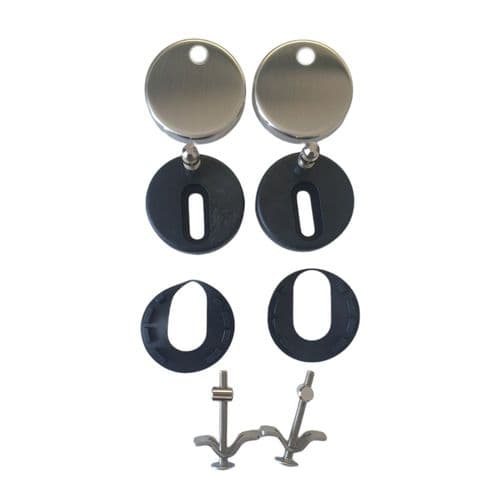
Concealed fixings
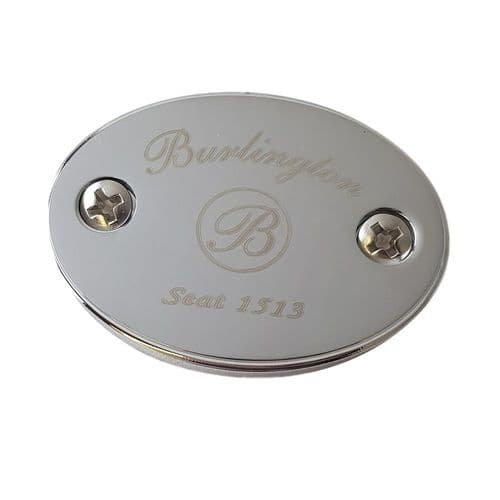
The bolt and nut are hidden inside a plastic housing that clips over the rear of the hinge, leaving no visible fixing on the top of the seat. Used where a clean visual finish at the back of the seat matters. Common on contemporary and designer toilet seat ranges.
-
Soft-close hinges
Hinges with a built-in damper mechanism that slows the lid and seat drop. Available in both top-fix and bottom-fix patterns. If the soft-close action has failed but the hinge body is sound, the damper alone replaces, with replacement dampers organised separately in our soft-close dampers range.
-
Quick-release fittings
Hinges with a button or clip that lets the whole seat lift off the bowl in seconds for cleaning. Replacement is like-for-like with the existing release mechanism, since quick-release patterns are not interchangeable across brands.
-
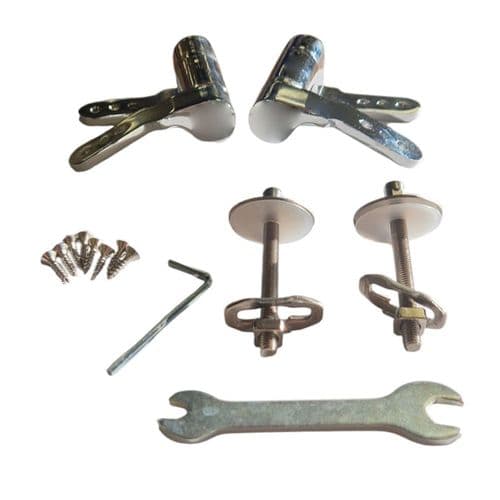
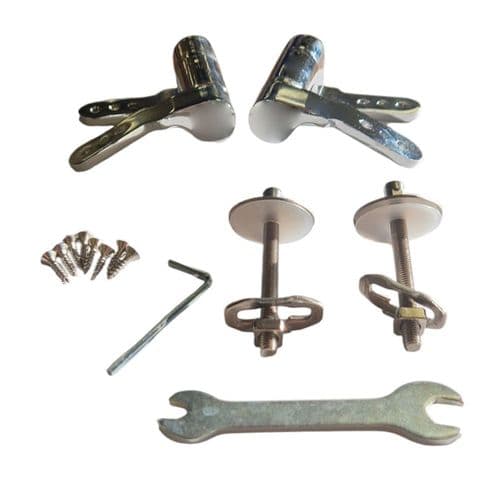
Universal fitting kits and plugs
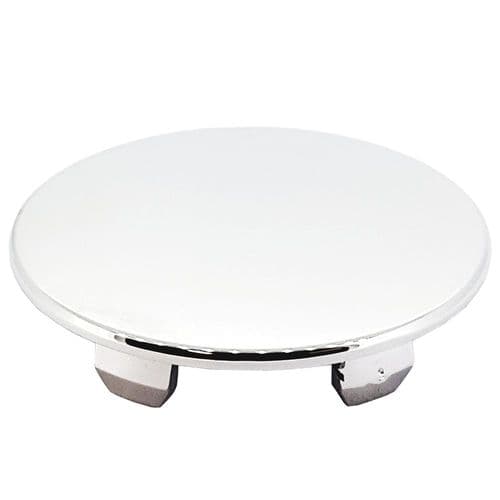
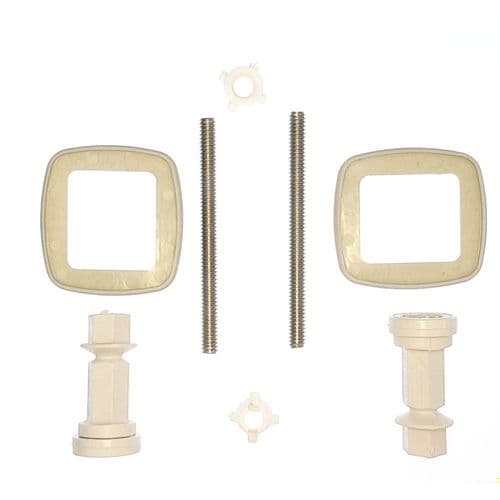
Generic fitting kits that fit a wide range of seats by hole spacing rather than by brand, plus the small white plastic plugs that cap the visible bolt heads on the front of the hinge. Useful when the original brand-specific kit is no longer available.
Choosing Between Fixings and a New Toilet Seat
Not every toilet seat problem is a fixings problem. Use the routing below to choose the right replacement before ordering.
- The seat moves or wobbles, the rest looks sound
Replace the fixings. This is the most common case and what this category covers. Hinge wear, loose bolts and stripped plastic plugs all show as a moving seat under weight.
- The soft-close has stopped working but the seat is otherwise fine
Replace the damper cartridge. The hinges and seat stay in place; only the small cylindrical mechanism inside the hinge is replaced, with replacement cartridges organised separately in our toilet seat soft close dampers range.
- The seat is cracked, yellowed or warped
Replace the whole seat. New fixings on a damaged seat will not seat flush and the wobble will return. See the wider toilet seats range for whole-seat replacements.
- The small rubber bumpers between seat and bowl are flat or missing
Replace the buffers. These are the small rubber pads the seat rests on; once compressed they let the seat sit unevenly. Buffers replace independently of the hinges, with the full range covered in our toilet seat buffers range.
If none of these descriptions matches the issue, the wider toilet seats and spare parts hub covers every related component and is a useful starting point for orientation.
Toilet Seat Fitting FAQs
What is the difference between top-fix and bottom-fix toilet seat fittings?
Top-fix fittings tighten from above the bowl, with the bolt running down through the hinge and into the porcelain. Bottom-fix fittings tighten from below with a wing-nut or knob, accessed from underneath the bowl rim. Top-fix is common on wall-hung and back-to-wall WCs where access from below is restricted; bottom-fix is the standard pattern on close-coupled WCs.
Can I replace toilet seat fittings without removing the seat?
For a fittings-only replacement (loose bolt, broken plug, worn plastic insert) the seat usually has to come off briefly so the old fittings can be removed and the new ones installed through the porcelain holes. The whole job is typically a five- to ten-minute task with a screwdriver and adjustable spanner. The seat itself stays the same and is refitted in place once the new fittings are tight.
Are toilet seat fittings universal or brand-specific?
Universal fitting kits cover most standard UK toilet seats with a 50 to 80mm hole spacing. Brand-specific fittings are required where the original seat uses a proprietary hinge pattern, common on Roca, VitrA, Pressalit and Geberit ranges. If a universal kit does not match the existing hole spacing or the hinge style, a brand-matched replacement is the right choice.
What are concealed toilet seat fixings?
Concealed fixings hide the bolt and nut behind a plastic housing that clips over the rear of the hinge, leaving no visible fixing on the top of the seat. They are common on designer and contemporary seat ranges where a clean visual finish matters. The underlying mechanism is usually a top-fix bolt, but the housing covers the joint completely.
Do all soft-close toilet seats use the same hinge type?
No. Soft-close hinges are available in both top-fix and bottom-fix patterns, with the damper integrated into the hinge body. The damper itself is sometimes a serviceable component (replaceable separately) or a sealed unit (replace the whole hinge). If the soft-close has stopped working but the hinge body is sound, replacement dampers are stocked separately in our toilet seat soft close dampers range for damper-only replacement.
How do I know if I need new fittings or a new toilet seat?
Check the seat itself first. If the plastic is cracked, yellowed, warped or the hinge mounting points on the seat are broken, a new seat is the right answer. If the seat is sound but moves under weight, the fittings have worn and a fittings replacement fixes it. New fittings on a damaged seat will not hold the seat flush, and the wobble returns within weeks.
What our customers say

-241530-1-p.jpg?w=500&h=500&v=554B9DFB-1820-418C-90F4-CB57E388429D)

-240433-p.jpg?w=500&h=500&v=1321FA68-989F-4942-A2CE-0414BE440208)

-284611-p.jpg?w=500&h=500&v=FF2DC976-EE1C-4759-AEF7-89AEDE5858BC)

-18234-p.jpg?w=500&h=500&v=edb56473-3232-40cb-a8c4-398b9f93d78a)

-18236-1-p.jpg?w=500&h=500&v=8BD5243F-914B-4BAC-9DE7-CEEF91089445)

-18249-p.jpg?w=500&h=500&v=D96FCCBF-6869-4E07-8C94-F0BF9B8ABB05)


-12518-p.jpg?w=500&h=500&v=edb56473-3232-40cb-a8c4-398b9f93d78a)


-12534-1-p.jpg?w=500&h=500&v=E1A2DB27-C421-4C15-827C-219B5F02FB3D)


-16001-1-p.jpg?w=500&h=500&v=F343D00B-0A74-4F99-B42B-16A2EA52D3A6)

-12510-1-p.jpg?w=500&h=500&v=CF55B0D1-455F-47A4-88B7-EA3405C988E1)


-157231-p.jpg?w=500&h=500&v=A4A677A1-292D-43AA-919D-043DC33ED5F5)


-12508-p.jpg?w=500&h=500&v=edb56473-3232-40cb-a8c4-398b9f93d78a)


-261413-dv-p.jpg?w=500&h=500&v=34E461A7-E427-4338-893C-54AE2BDE929F)


-29453-p.jpg?w=500&h=500&v=edb56473-3232-40cb-a8c4-398b9f93d78a)

-178640-p.jpg?w=500&h=500&v=edb56473-3232-40cb-a8c4-398b9f93d78a)
-178640-p.jpg?w=500&h=500&v=7E2F8149-0780-4D38-A3BB-C17CC5B75F3D)
-178638-p.jpg?w=500&h=500&v=edb56473-3232-40cb-a8c4-398b9f93d78a)

-211225-p.jpg?w=500&h=500&v=36C9A70B-CE1C-4FF7-8AB9-62EC3A5B0DAE)

-173019-1-p.jpg?w=500&h=500&v=76D61BDF-0574-4FD2-B690-1AA10593D6EB)

-196714-1-p.jpg?w=500&h=500&v=56C9E771-98B0-4909-A1F7-CC723CE08F79)

-76181-1-p.jpg?w=500&h=500&v=edb56473-3232-40cb-a8c4-398b9f93d78a)


-32866-1-p.jpg?w=500&h=500&v=D874CDFB-02FE-4FAD-B209-A9103353A5A1)

-64570-p.jpg?w=500&h=500&v=05833831-397C-4878-83B5-E0186C287948)

-169448-p.jpg?w=500&h=500&v=edb56473-3232-40cb-a8c4-398b9f93d78a)

-249443-p.jpg?w=500&h=500&v=C10EB4EC-8A64-4554-A666-DAC5123474FE)

-211696-1-p.jpg?w=500&h=500&v=671F3F73-7580-4A4B-9AAB-6C9F62CED92E)

-240219-1-p.jpg?w=500&h=500&v=465645BF-D002-4D3B-BFE1-7EDAC49668FF)

-202025-1-p.jpg?w=500&h=500&v=5BFC3835-4416-4D6B-AAF6-E71F9EF3864E)

-206700-1-p.jpg?w=500&h=500&v=FA5A968A-55F6-4AF1-BF8F-F795D02B99B1)

-235823-p.jpg?w=500&h=500&v=D2678BDC-D9D3-4BF8-83DC-671364524E68)