Kitchen Wastes & Spares
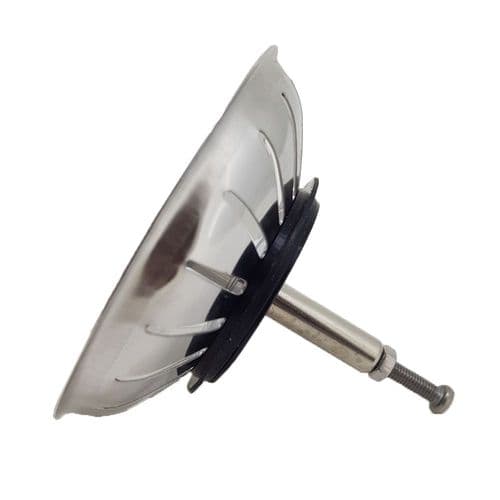
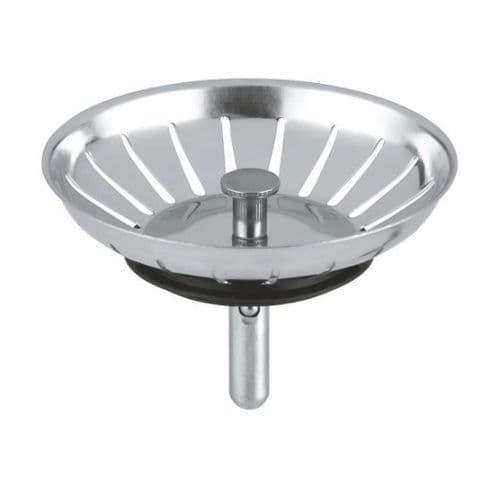
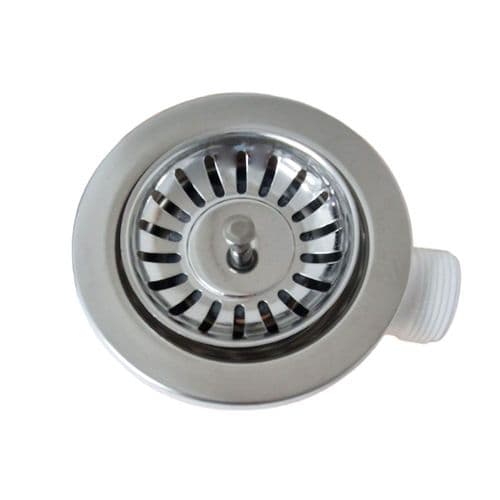
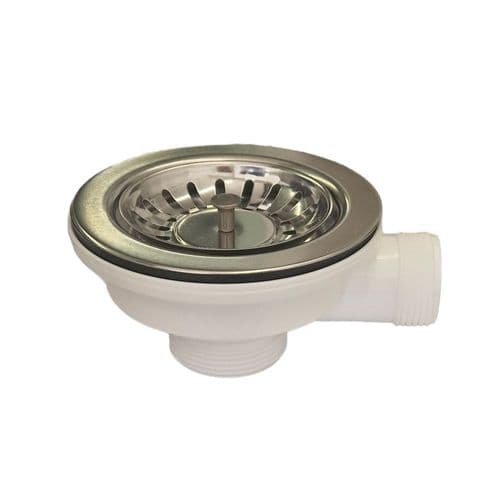
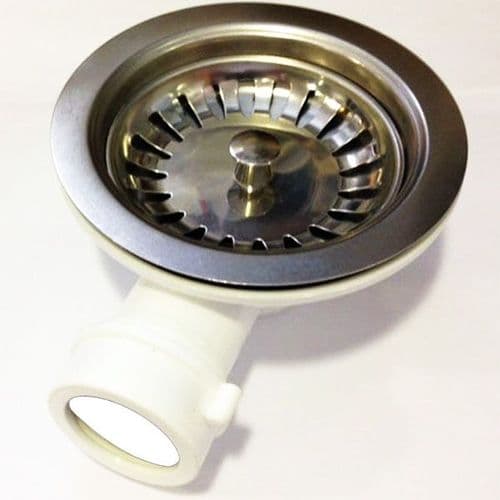
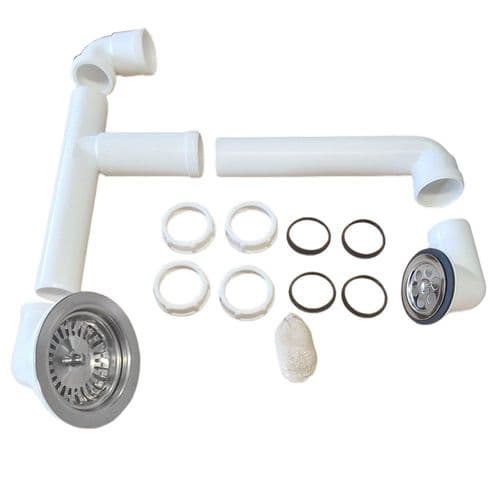
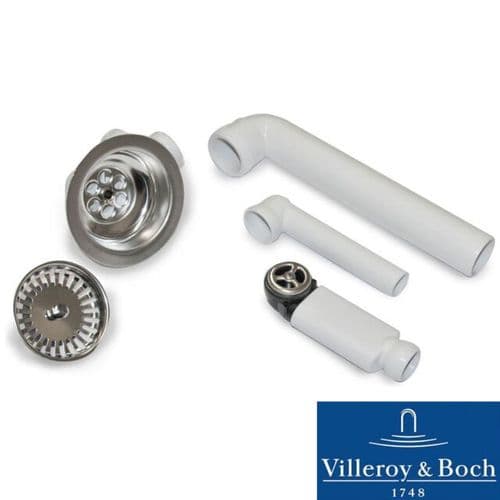
A kitchen sink waste is a different fitting from a bath or basin waste. Kitchen sinks have a wider drain opening to clear food waste and a basket strainer fitted in the outlet to catch debris. The strainer, the plug, the overflow gasket and the trap underneath all wear separately, with replacement parts covering the four common fittings: standard basket strainer, push-down click-clack, plug-and-chain, and the small accessory parts (gaskets, washers, rubber seals).
KITCHEN WASTES & SPARES | BUYING GUIDE
Types of Kitchen Sink Waste
Replacement choice depends on the sink type and how the existing waste is operated. Four patterns cover most UK domestic kitchens.
-
Basket strainer wastes
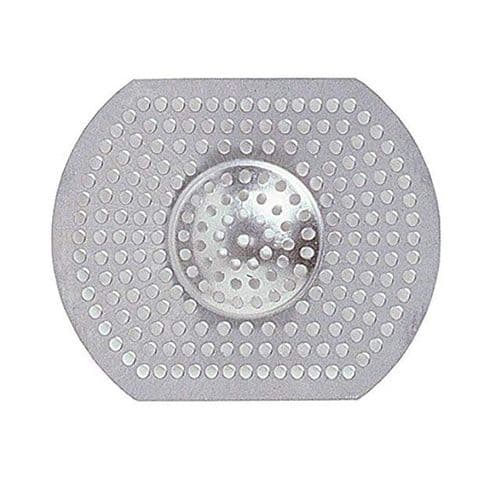
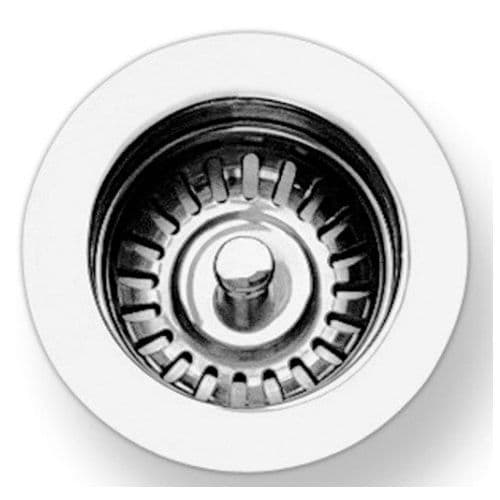
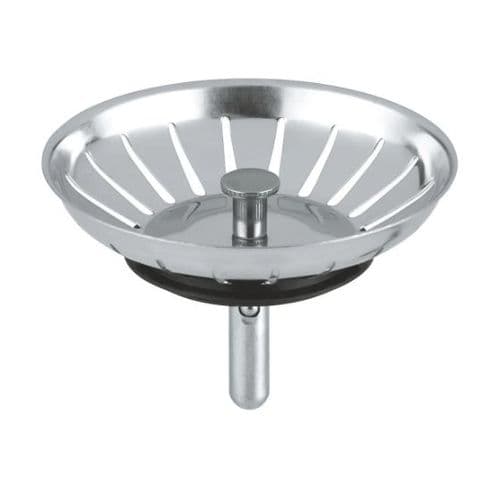
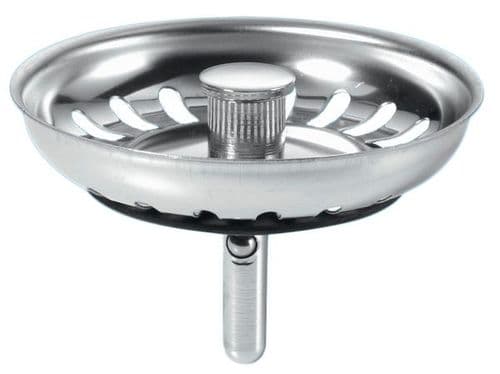
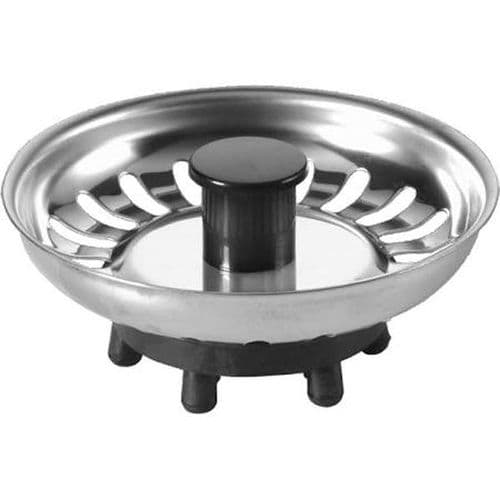
The default UK kitchen waste. A wide strainer dome sits in the sink outlet, catching food and debris. The plug drops in from above when needed. Strainer diameters are typically 90 mm for domestic sinks, 113 to 114 mm for larger or commercial fittings.
-
Click-clack (push-button) sink wastes
Operated by pressing the cap. No visible plug or chain. Common on modern designer kitchens with under-mount sinks where the cleaner look is preferred. Mechanism wear is the usual replacement trigger.
-
Plug-and-chain sink wastes
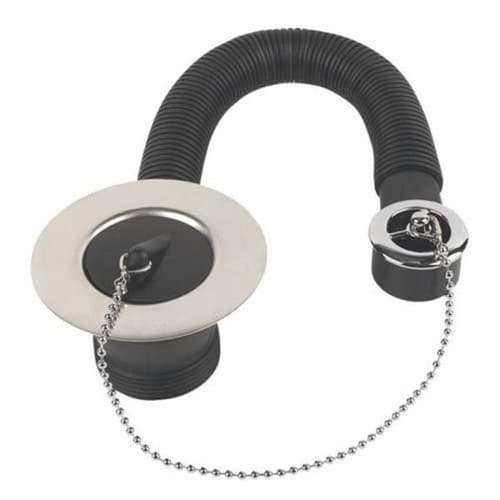
Traditional fitting with a plug attached to a chain. Less common on modern kitchens but still found on older properties and where simplicity is preferred. Plug and chain replace independently of the strainer body.
-
Dual-bowl and overflow wastes
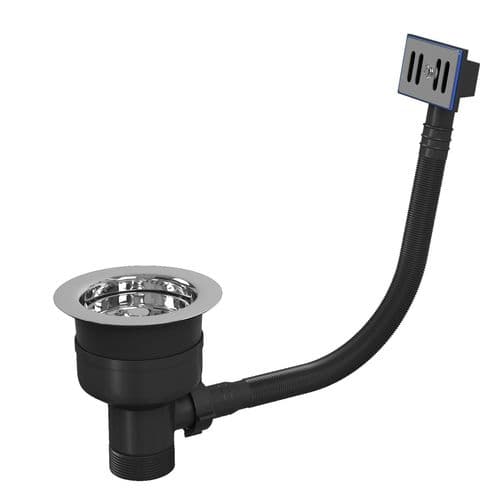
Twin-bowl sinks use a connecting waste that joins both bowls before the trap. Overflow connections route excess water from the sink rim back to the waste outlet. Replacement is brand-specific because the inter-bowl pipework is sized to the original sink.
How Kitchen Wastes Differ from Bath and Basin Wastes
Kitchen sink wastes are larger and more robust than bathroom equivalents because they clear food waste, hot water from washing-up, and grease. The strainer dome is wider (90 mm versus 58 mm on a typical bath plug), the outlet thread is usually 1.5 inch (matching baths and shower trays rather than the 1.25 inch standard for basins), and the waste body itself is heavier-walled to withstand the temperature and weight of a full pan of water poured in at once.
Replacement strainers and basket inserts are not interchangeable with basin or bath plugs. Bath waste assemblies sit in our bath wastes range, with bathroom basin equivalents covered separately. Companion replacement traps for both kitchen and bathroom installs are listed in our bathroom waste traps range.
Common Sink Sizes and Strainer Diameters
Strainer diameter is the first measurement to confirm. The hole in the sink is fixed at manufacture; the strainer must match.
| Strainer diameter | Sink type | Outlet thread |
|---|---|---|
| 90 mm | Most UK domestic stainless and ceramic sinks | 1.5 inch / 40 mm |
| 113 to 114 mm | Larger and commercial-style domestic sinks | 1.5 inch / 40 mm |
| 88 to 92 mm | Older British kitchen sinks (pre-1990) | 1.5 inch / 40 mm with adapter |
The wider bathroom wastes hub covers the rest of the wastes range across the site.
Kitchen Sink Waste FAQs
What is a kitchen sink waste?
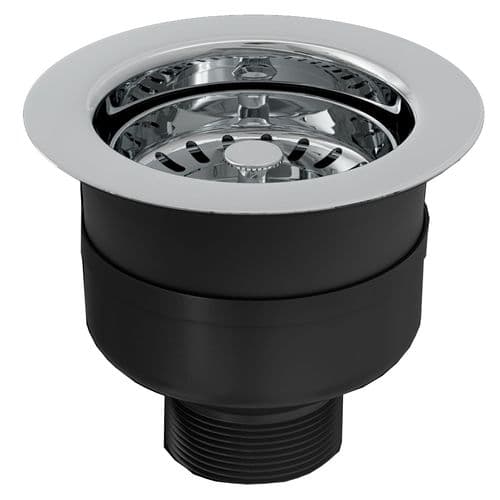
A kitchen sink waste is the assembly that drains water from the sink: it includes the strainer (which catches food debris), the plug or stopper, the body that fits into the sink outlet, and the overflow connection on dual-bowl sinks. It is generally larger and more robust than a bath or basin waste because it has to clear food waste rather than just water and soap residue.
How do I know what kitchen sink waste size I need?
Most UK kitchen sinks use a 90mm strainer diameter at the sink and a 1.5 inch (40mm) outlet thread. Larger or commercial sinks use 113mm or 114mm strainer diameters. Measure the existing strainer rim or the hole in the sink before ordering, and confirm the outlet thread by checking the existing waste body.
Can I fit a basket strainer to a stainless steel sink myself?
Yes, on most installs. Remove the existing strainer (unscrew the lock-nut from below the sink), clean the sink hole, apply a new rubber gasket on top and silicone sealant around the rim, drop the new strainer through, fit the gasket and lock-nut from below, and tighten. The waste pipe and trap connect to the threaded outlet at the bottom of the strainer.
Do you supply kitchen sink wastes for older or less common sinks?
Yes. Older British kitchen sinks (pre-1990s) sometimes use 88mm or 92mm strainer diameters that no longer match modern 90mm fittings. Adapter rings and brand-specific replacements cover most of these, with brand-matched parts catalogued in our manufacturer directory.
What our customers say


-261475-p.jpg?w=500&h=500&v=B90753AF-1C20-42A8-9E2A-CD0847A5E954)

-261184-p.jpg?w=500&h=500&v=0133BAB8-F19D-44FC-806D-644166C2FC6B)

-261527-p.jpg?w=500&h=500&v=D5EB43BF-E289-493E-B0CA-17217CA4CA5E)

-261519-p.jpg?w=500&h=500&v=A073AFF5-BE51-48E0-903D-E21983A00BE7)

-162635-p.jpg?w=500&h=500&v=edb56473-3232-40cb-a8c4-398b9f93d78a)


-141694-p.jpg?w=500&h=500&v=edb56473-3232-40cb-a8c4-398b9f93d78a)


-227830-p.jpg?w=500&h=500&v=31A7392E-5078-46B1-BD9D-EA5809C99602)

-255221-p.jpg?w=500&h=500&v=202EADB0-44A5-4FF8-A3A2-16D0B5E5FE89)

-205048-p.jpg?w=500&h=500&v=51A3FACF-442F-4B6F-8DBD-054C620C864D)

-220858-p.jpg?w=500&h=500&v=F866A958-D378-4A15-8F3E-F1314884A9B4)

-141185-p.jpg?w=500&h=500&v=E408FD3A-F861-4E60-B5CD-4E75F47F67BA)


-30034-p.jpg?w=500&h=500&v=edb56473-3232-40cb-a8c4-398b9f93d78a)

-66793-p.jpg?w=500&h=500&v=EEEAC336-FF56-48F1-84D2-EE2B2572BF8F)

-66795-p.jpg?w=500&h=500&v=C6E60475-EE3D-484E-995E-FC9B387EB8DE)

-231188-p.jpg?w=500&h=500&v=461C28FB-2A11-486E-B0B1-211F740837D5)

-231189-p.jpg?w=500&h=500&v=187C4897-AB6E-4BBA-B6D2-4C912825D2C3)


-146652-p.jpg?w=500&h=500&v=83594E0F-81B9-476D-8886-C1B8C3A9908A)

-206307-p.jpeg?w=500&h=500&v=B84EC196-00DC-43D5-BE9D-4A8AE57343CB)